
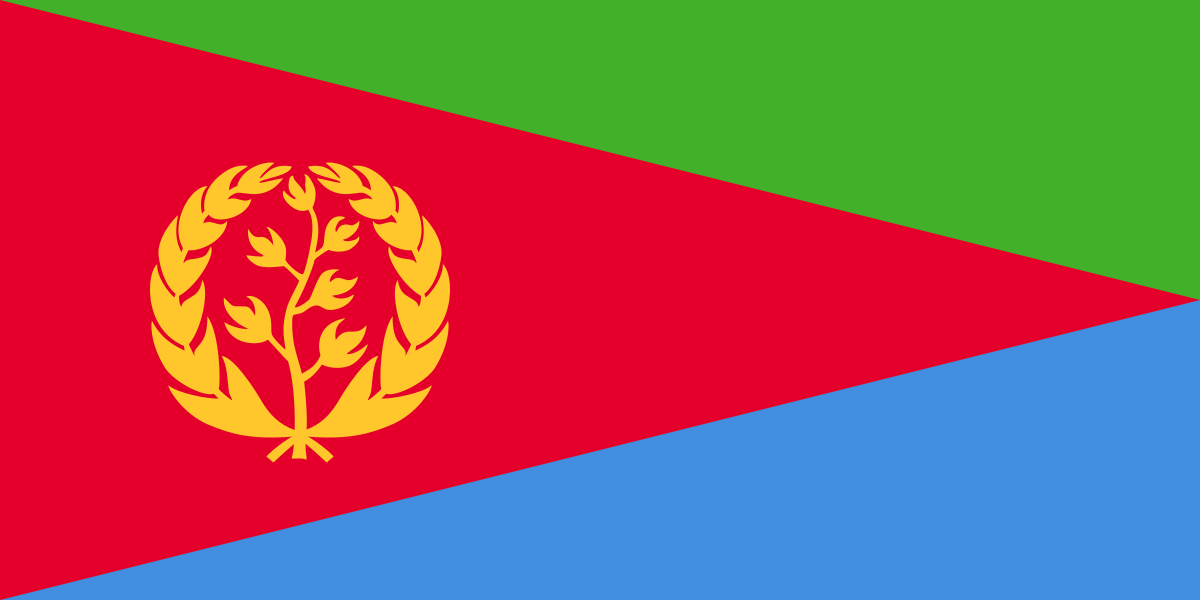
Eritrea GDP Per Capita (2026)
Eritrea has a developing Horn of Africa economy supported by agriculture, mining, fisheries, construction, trade, and services. GDP per capita provides an important measure of how national economic production compares with population, although available economic data may be less comprehensive than for many other countries. Explore Eritrea’s GDP per capita data, historical trends, development patterns, and economic comparisons below.
GDP Per Capita 2026
$656
Est. in USD
World Rank
#187
Out of 195 countries
Change vs 2025
N/A
Previous-year data unavailable
Africa Rank
#49
Out of 54 countries
1. Eritrea GDP Per Capita in 2026
Eritrea’s GDP per capita reflects estimated economic production generated for each resident across agriculture, mining, services, and other sectors. Adjusting total GDP for population provides a standardized measure for comparing economic output on a per-person basis. The indicator should be interpreted with appropriate caution where official statistical coverage is limited.
2. Eritrea GDP Per Capita Growth (2026–2026)
3. Eritrea GDP Per Capita (Historical Data)
| Year | GDP Per Capita (USD) | Annual Change |
|---|---|---|
| 2026 | $656 | — |
4. Eritrea GDP Per Capita Growth
1-Year Change
N/A
(2025 to 2026)
5-Year Change
N/A
(2021 to 2026)
10-Year Change
N/A
(2016 to 2026)
20-Year Change
N/A
(2006 to 2026)
Eritrea’s GDP per capita can be influenced by mineral production, agricultural conditions, trade, inflation, investment, population changes, and external economic relations. Limited data availability can make short-term movements more difficult to assess precisely. Historical estimates nevertheless help provide a broader view of how output per resident may have changed over time.
5. Eritrea GDP Per Capita vs Africa and World
Eritrea
$656
Africa Average
$3,302
World Average
$25,179
$0
$12,590
$25,179
USD
Eritrea’s GDP per capita is approximately
80.1%
below the
Africa average
and
97.4%
below the world average.
6. Eritrea GDP Per Capita Ranking in Africa
| Rank | Country | GDP Per Capita (USD) |
|---|---|---|
| #46 | Niger | $822 |
| #47 | Somalia | $813 |
| #48 | Malawi | $733 |
| #49 | Eritrea | $656 |
| #50 | Madagascar | $656 |
| #51 | Mozambique | $632 |
| #52 | Central African Republic | $613 |
7. GDP vs GDP Per Capita in Eritrea
Eritrea GDP (Nominal)
$2.3 Billion
(2026)
Eritrea GDP Per Capita
$656
(2026)
Eritrea’s total GDP represents the overall scale of recorded economic activity, while GDP per capita adjusts that output for population. Total GDP provides a broad measure of national economic size, whereas GDP per capita offers a population-adjusted view of production per resident. Both indicators should be considered alongside the limitations of available economic data.
Explore more:
Eritrea GDP
8. Eritrea GDP Per Capita Forecast
Forecast data is currently unavailable for
Eritrea.
9. Eritrea GDP Per Capita: Key Findings
Eritrea GDP per capita is estimated at $656 in 2026.
It ranks #187 globally and #49 in Africa.
It is approximately 80.1% below the Africa average.
It is approximately 97.4% below the world average.
10. What Is GDP Per Capita?
GDP per capita is the total economic output of a country divided by its population.
GDP Per Capita
=
GDP
÷
Population
It helps measure the average economic output per person and is widely used to compare economic performance across countries. Higher values generally indicate greater economic output per resident.
11. Methodology and Data Sources
Primary Source:
International Monetary Fund (IMF)
Additional Sources:
World Bank,
United Nations
Population Source:
UN Population Division
Currency:
Current USD (Nominal)
Update Frequency:
Annually
Last Updated:
September 2026
12. Eritrea GDP Per Capita FAQs
Eritrea GDP per capita is estimated at $656 in 2026.
Eritrea ranks #187 globally and #49 in Africa by GDP per capita.
The latest year-over-year change is currently unavailable.
GDP per capita data for 2015 is currently unavailable.
Eritrea GDP per capita is approximately 80.1% below the Africa average.



14. Explore GDP Per Capita
Disclaimer:
All data are estimates based on IMF, World Bank,
United Nations and related economic datasets.
Figures may differ from official national statistics.